|
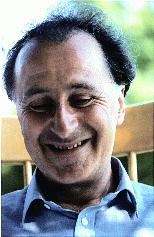
Another interesting element, apart from the rapidity of change, is the factor of accident or coincidence, often traceable to a personal event or a meeting of one or two people in critical circumstances. – Ben Segal, A Short History of Internet Protocols at CERN, April, 1995. |
The European Network (EUnet) spread the ARPANET throughout the research community in Europe, and connected universities and research centers in a similar way to how the CSNet worked in the United States.
Before 1988, the EUnet primarily supported the X.25 protocol, which was packet oriented like the Internet’s TCP/IP, but used mainly for point-to-point commercial communications. (Larry Roberts was CEO of an X.25 network company called Telenet.)
In 1988, Daniel Karrenberg, the system manager at the Amsterdam Mathematics Centre, which served as the gateway to the ARPANET for email and Usenet newsgroup communications, and Ben Segal, the CERN TCP/IP Coordinator, added routers to the EUnet that also supported TCP/IP communications. This provided the potential for full network connectivity to the ARPANET, introduced the Internet to CERN, and helped Europe convert to TCP/IP through use of the EUnet.
Shortly thereafter in 1989, John Gamble, the new CERN TCP/IP Coordinator, connected their network to the EUnet, thereby providing full TCP/IP connectivity to the ARPANET. Interestingly, this was just in time for Tim Berners-Lee to use this connection to distribute the first web server on the Usenet to the world, sparking the first public explosion in Internet use. (Berners-Lee also credits Segal with being something of a mentor to him while at CERN.)
In the early 1990’s, EUnet Ltd. became a commercial spin-off from the European Unix systems User Group (EUUG, later renamed to EurOpen) under the efforts of an American named Glenn Kowack. Several countries then leveraged EUnet, incorporated in Ireland, to spread the Internet across the continent. For example, Luc De Vos in Belgium created EUnet Belgium in 1993 as a spin-off from the university of Leuven. De Vos was also subsequently chairman of the board of EUnet for a time.